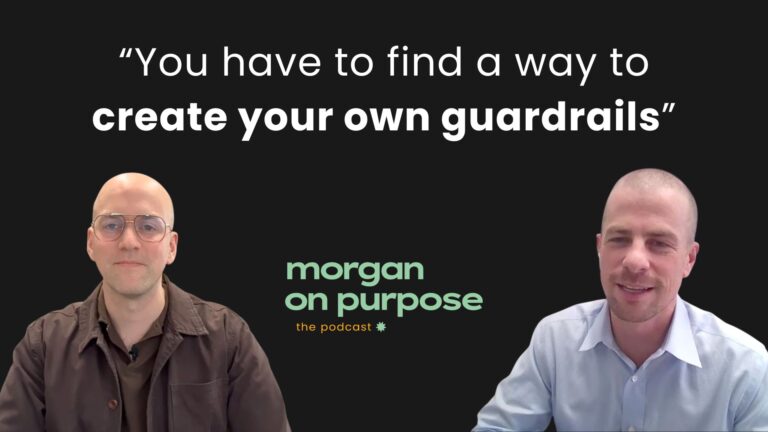
One of the biggest hurdles I’ve seen in my career as a financial planner is a stubbornly persistent idea that having money is somehow at odds with living a meaningful life. In reality, your money and your mission should intersect. That’s a topic I tackled in the very first episode of my podcast, Morgan on Purpose: The Podcast with my good friend and fellow financial advisor, Zach Ashburn, co-founder of Reach Strategic Wealth.
We didn’t just talk about spreadsheets; we dove into the psychological and financial shifts that happen when a career transforms into a calling.
The rise of the accidental entrepreneur
In my day job, I specialize in working with entrepreneurs, but I’ve noticed a fascinating trend: Many of the business owners I work with don’t identify as business owners or entrepreneurs. It happens so frequently that Zach and I started calling them accidental entrepreneurs. (Or sometimes, reluctant entrepreneurs.)
In other words, the people we work with didn’t drop out of college with the goal of building the world’s next greatest tech product in their garage. Instead, they’re high-level corporate specialists—tech experts or strategists—who hit a crossroads. Maybe a life change, like moving to the coast or needing to care for an aging parent, forces a need for more flexibility. Or perhaps they’ve developed “layoff fatigue” from the instability of big tech.
Maybe they take on a few consulting projects to bridge the gap, and suddenly, they realize they’ve built a firm. This transition is exciting, but it’s also a “comet” moment. As I discussed with Zach, once that comet hits—once you’ve tasted the autonomy of being a business owner—there is no going back. You are indelibly changed.
For some people that may mean that you’re an entrepreneur for life—there’s no going back to the world where you aren’t your own boss. But Zach pointed out he’s actually seen the reverse work, too. Some entrepreneurs return to corporate life, but with a new confidence. You go back with an understanding of what your work and skills are valued at on the open market, and it allows you to view your work from a new perspective.
Unlocking the golden handcuffs
One of the most important parts of our conversation centered on reframing the idea of golden handcuffs; it’s something Zach is particularly passionate about. For instance, if you work a high-paying job with lucrative stock options that help you provide for your family, you might keep going to work day after day even if you hate everything about your job.
So Zach’s solution is to help people break down what’s actually trapping them. And he’s found that the handcuffs aren’t the salary so much as the lifestyle the salary is supporting—the health insurance a family depends on, the mortgage in a great school district, or the “mental accounting” we do to justify staying in a role that no longer serves our purpose.
So what can we do to release those handcuffs?
Zach brought up a powerful quote from the book Pirate Hunters that really stuck with me. Paraphrased, it can be summed up as: “Treasure is crisis, because what you get in the end is yourself.”
The “crisis” happens when you realize you have enough financial resources, but you’re still lacking freedom. Part of my mission is helping people realize when they have the keys to those handcuffs already in their pockets. It’s about moving from a mindset of financial insecurity to one of intentional agency.
So what happens if you decide to break free from the handcuffs and become an entrepreneur?
Taking the leap: Cash flow is king
Despite our philosophical deep dives, Zach and I are still financial planners at heart, so we had to wrap up our conversation about how people become entrepreneurs by digging into some practical tips. I asked Zach for the one piece of advice he’d give to a newly realized entrepreneur who is ready to “pull the ripcord” on their corporate life.
His answer? Cash flow is king.
In the corporate world, we tend to look at the long-term picture—retirement accounts and five-year plans. But for the entrepreneur, the income and expenses happening this month are the tools that give you the confidence to make big moves. Understanding the flow of money in and out of your life isn’t just about accounting; it’s about providing the security you need to stay focused on your purpose.
Building a business on purpose means being intentional about what you’re creating and ensuring it fits within your personal and family goals. You don’t have to be a monk to live a meaningful life—you just have to be willing to look at your money as a tool for your mission.
I invite you to listen to the full episode to hear more about Zach’s journey and our deep dive into the “comet” effect of entrepreneurship. Whether you’re a corporate veteran or a burgeoning business owner, I hope this conversation helps you move one step closer to living your life, on purpose.